AI voices in ads. A Warsaw court makes the brand pay for a narrator look-alike
The Regional Court in Warsaw ruled on 13 November that JFC Polska’s AI-voiced ads imitated a voice actor. AI voice vendors also leave the legal risk with their customers.
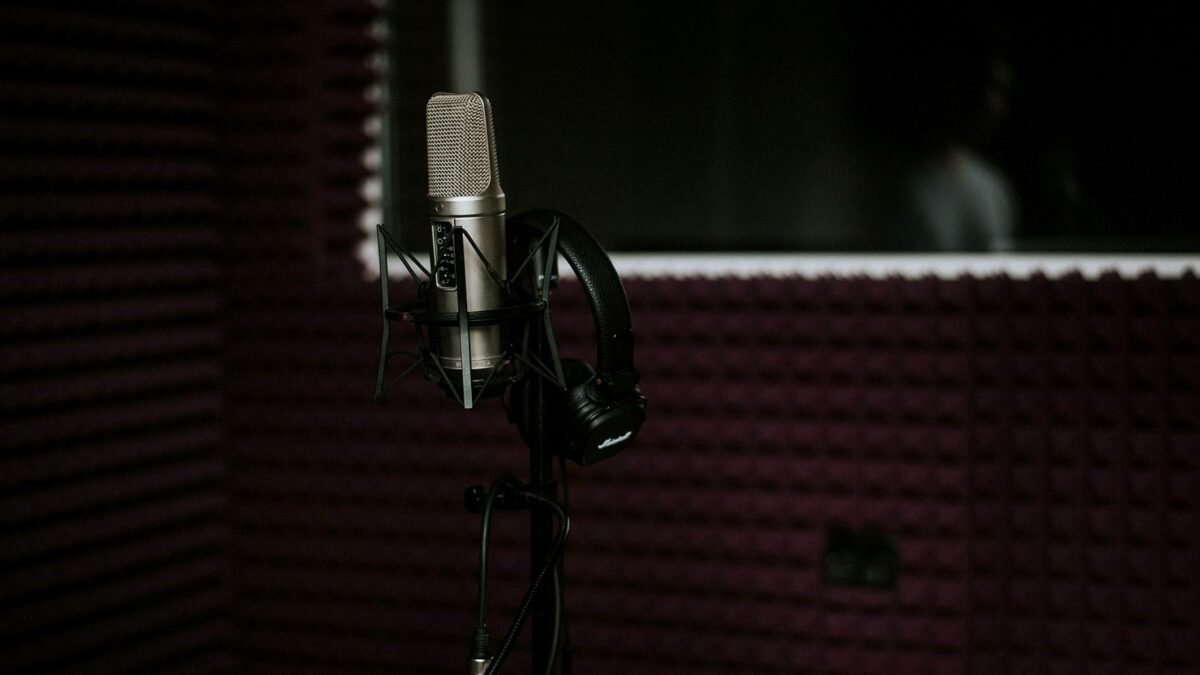
Photo: John Taran / Pexels
With AI voices in ads, the brand that runs the ad carries the risk when the voice sounds like a real person. On 13 November 2026, the Regional Court in Warsaw ordered JFC Polska to pay voice actor Jarosław Łukomski more than 47,000 złoty. Its ads used an AI voice that the court found deceptively similar to his. The ruling can still be appealed.
We read the terms and help pages of four companies that sell AI voices: Microsoft, Google, OpenAI and ElevenLabs. Two of them check the speaker’s consent before a voice model exists. None of the four takes on the risk of an ad that imitates someone.
JFC Polska ran its ads in four languages with a library voice
The ads promoted small household sewage treatment plants. They ran in Polish, Czech, Slovak and Hungarian. The lawsuit was filed on 20 November 2025, according to PolscyLektorzy.pl, a Polish voice actors’ site that backed Łukomski.
A graphic designer who made the ads told the court he took the voice from a library of ready-made AI voices. He only changed its pace and emotion. PolscyLektorzy.pl named the tool as ElevenLabs. Wirtualnemedia.pl, a Polish media trade site, noted that this alone does not show how the voice model was made.
Judge Sylwia Wit vel Wilk called the recordings a deepfake: AI material that pretends to be a specific person. She held that every person’s voice is protected as part of their personal rights, famous or not. A court-appointed expert found the two voices “clearly (deceptively) similar”. JFC Polska filed its own 422-page opinion.
Łukomski asked for 50,000 złoty for harm and 102,000 złoty for profits made from his voice. He got 30,000 and just over 17,000. The company must also pull the ads and post an apology on Facebook for 45 days.
Tomasz Bartos of Mikrofonika, a Polish voice bank that supported the actor, said he would take legal steps against ElevenLabs.
Microsoft, Google, OpenAI and ElevenLabs set four different consent rules
We checked each company’s pages as they stood on 16 November 2026. We asked three questions. Does the vendor require the voice owner’s consent? Who is responsible for the finished audio? Must listeners be told the voice is synthetic?
Microsoft limits Custom Neural Voice, its service for building a custom voice, to customers it has registered and approved. The voice talent must give explicit written permission first. Before training, the speaker records a statement acknowledging how the voice will be used. Microsoft may run speaker verification on it. Customers must tell users the voice is synthetic. Getting permissions is the customer’s job.
Google offers instant voice cloning in Chirp 3 only to allow-listed customers. The speaker records a fixed consent script of up to 10 seconds. It begins: “I am the owner of this voice and I consent to Google”. A custom script is not accepted. The help page, updated 10 November, says nothing about telling listeners. It also does not say who is liable.
OpenAI bans using a person’s likeness, including their voice, without consent in ways that could confuse authenticity. That rule sits in usage policies that take effect on 20 November 2026. OpenAI describes no consent procedure. It says it holds people accountable for misuse.
ElevenLabs puts the check on the user. Its terms, updated 9 October 2026, say: “You are responsible for reviewing Output before use or distribution.” Users also warrant that their content and voice models do not break anyone’s rights. Paid plans allow commercial use, free plans do not. The Voice Library has its own addendum, dated 6 March 2026. People who share a voice must not base it on someone else’s voice. ElevenLabs may pay them, at its sole discretion. Other users can then generate audio with that voice. None of these documents mentions ads directly. ElevenLabs says its moderation tools are “not guaranteed” to stop prohibited text.
Microsoft and Google verify consent before a model exists. In the ElevenLabs library, the person who uploads the voice declares it. The brand that later uses the voice never sees that consent.
EU rules since 2 August 2026 require a label on deepfake audio
Article 50 of the AI Act, the EU’s law on artificial intelligence, now applies across all 27 member states. The Commission says the transparency rules took effect in August 2026. The Digital Omnibus package, in force since 27 July 2026, moved deadlines for high-risk systems. It did not move this one.
Companies that use AI to make deepfakes, including audio, must disclose that the content was generated or manipulated. The AI Act defines a deepfake as content that resembles existing people and would falsely appear authentic. For clearly artistic or satirical work, a light-touch notice is enough.
A label protects the listener. The claim in Warsaw came from someone else: the man whose voice was imitated. It rested on Polish civil law on personal rights. We covered how the Polish ad industry splits labelling duties and how Google and Meta signed the EU labelling code.
Denmark wants a legal right to your own voice and face
Denmark’s culture minister, Zenia Stampe, tabled a copyright bill on 8 October 2026. It would make it illegal to share realistic imitations of a person’s appearance and voice. Caricature, parody and satire are exempt. The exemption falls away for misinformation that could cause serious harm. The ministry hopes the law can take effect at the turn of the year.
Poland has no such law. Łukomski needed almost a year and five hearings to win in court.
Viant buys an AI voiceover tool as YouTube hunts fake voices
Ad tech firm Viant paid $20m for Waymark, whose software writes a script and adds visuals and a voiceover for TV ads. YouTube told news partners it will detect fake voices of journalists. And Dior’s holiday film drew claims of AI use that its director denied.
OpenAI’s new rule on voices used without consent applies from 20 November 2026. Denmark’s bill aims to take effect at the turn of the year. JFC Polska can still take the Warsaw ruling to an appeal court.
Sources
- Microsoft Learn, Limited Access Custom Neural Voice — written talent permission and synthetic voice disclosure, 26.08.2026
- Microsoft, Code of Conduct — no impersonation without consent, 1.05.2026
- Google Cloud, Chirp 3 Instant Custom Voice — recorded consent script, 10.11.2026
- OpenAI, Usage Policies — ban on using a voice without consent, effective 20.11.2026
- ElevenLabs, Terms of Service — user responsible for output, 9.10.2026
- ElevenLabs, Voice Library Addendum — rules for shared voices, 6.03.2026
- AI Act, Article 50 — deepfake disclosure duty
- European Commission, AI Act — transparency rules from August 2026, Omnibus in force 27.07.2026
- Danish Ministry of Culture — bill on right to own body and voice, 8.10.2026
- Wirtualnemedia.pl — report on the Warsaw ruling, 13.11.2026
- PolscyLektorzy.pl — case history, 13.11.2026